Does your kitchen feel dated? A new backsplash is one of the fastest ways to give it a facelift. It complements your kitchen’s style, ties your cabinets and countertops together, and protects your walls from inevitable splashes and spatter from cooking.
In this guide, we’ll walk you through:
- The most popular kitchen backsplash layout options
- Some materials worth considering
- How to choose a backsplash that fits your needs and matches your personality.
What Is a Kitchen Backsplash?
A kitchen backsplash is a protective panel installed on the wall behind your countertops, sink, and cooking areas. It shields the wall from moisture and grease while making cleanup much easier.
It doesn’t just protect your wall, though. A well-chosen backsplash also serves as a focal point in your kitchen, tying together your cabinets, countertops, and other design elements.
Types of Backsplash Layout
Your kitchen backsplash layout, which is the pattern your material is set in, shapes the finished look as much as the material itself. Here are six layouts that homeowners choose most often.
Classic Subway Tile Layout
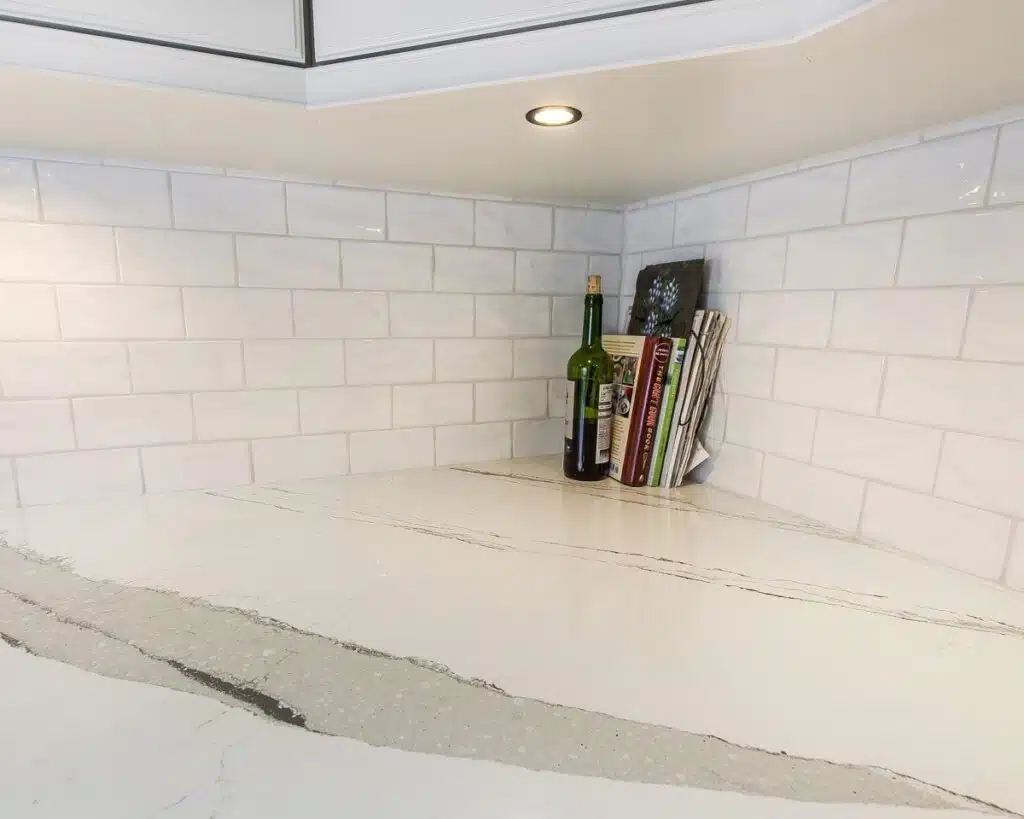
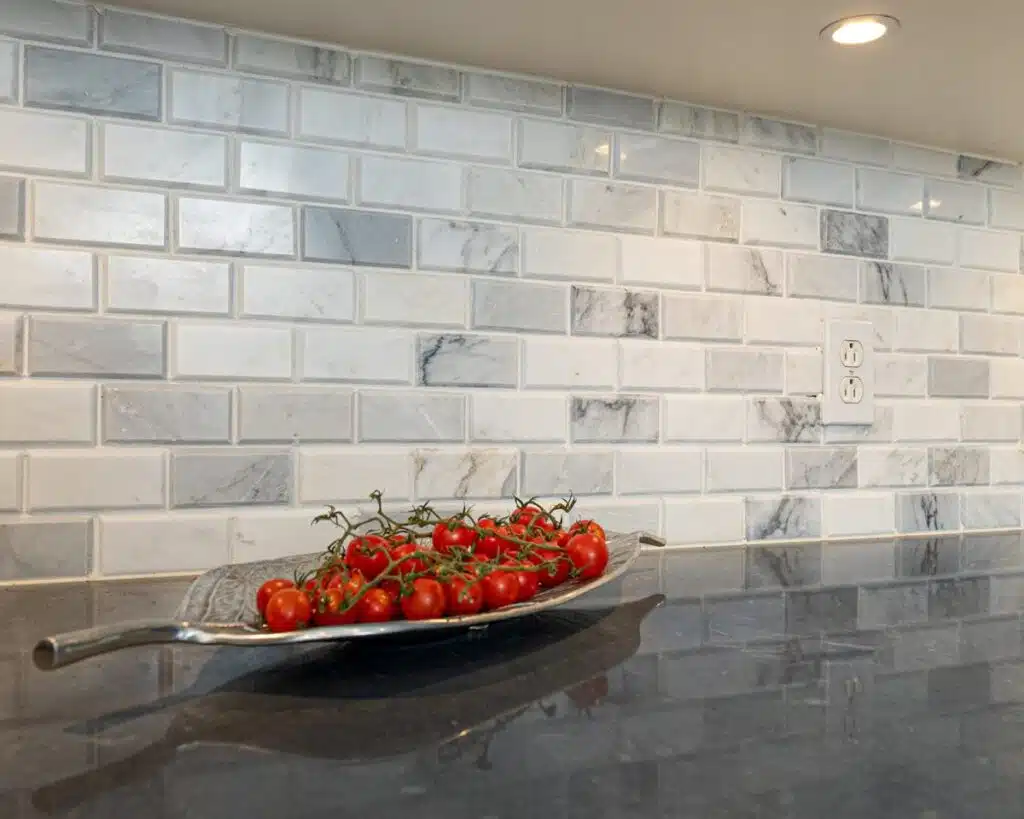
Subway tiles are a classic for a reason. They bring a fresh, clean look that suits modern, traditional, farmhouse, and cottage kitchens alike.
The secret to making them stand out is creative installation. Stack them vertically to emphasize taller walls, or lay them in a herringbone pattern for a flowing, dynamic effect. Meanwhile, a 1/3 or 1/2 offset echoes the familiar brick-pattern look of a subway wall.
Bold Geometric Patterns
Bold geometric patterns, from hexagons to chevrons, add texture and personality to eclectic kitchens. Pair them with the right finish to amplify their impact; glass and matte ceramic are both popular choices for a contemporary look.
Mosaic and Small-Tile Layouts
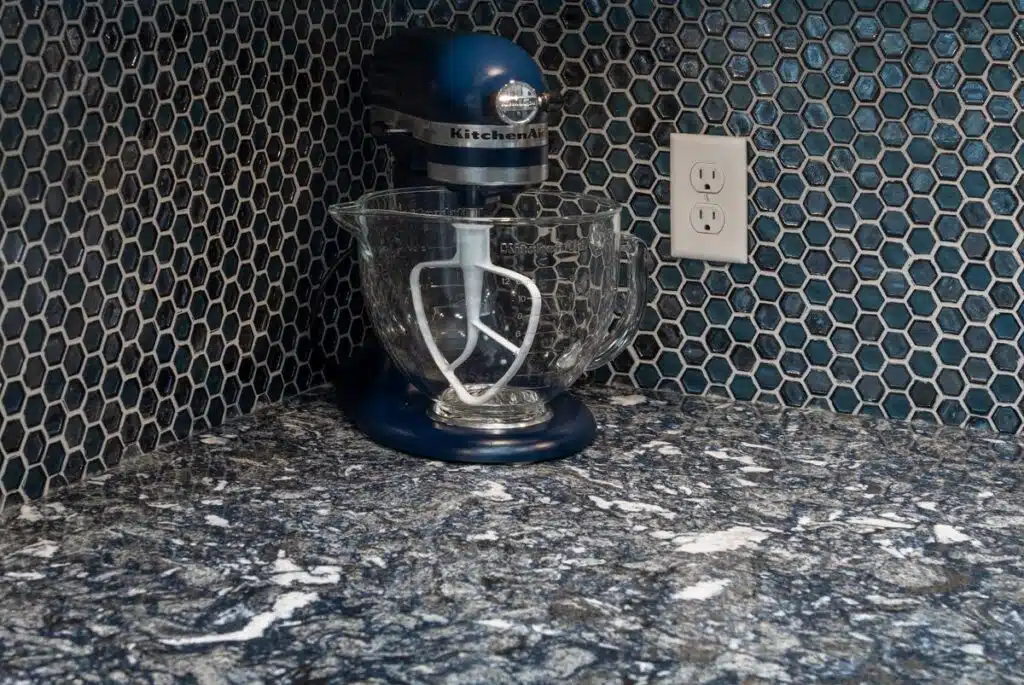
Mosaic tiles let you step away from standard squares and rectangles. You can mix tile shapes, sizes, and patterns with colorful accents to create a pattern unique to your kitchen. However, every tile placement and grout line matters, which is why a professional installation makes such a difference in the finished result.
Diagonal Tile Layout
A diagonal layout is one of the best choices for a small kitchen. Oversized diamond patterns bring a fresh, modern twist to standard tile shapes, and their diagonal lines lead the eye across the room, making it feel more spacious than it is.
Vertical and Stacked Layouts
If your kitchen has low ceilings, a vertical or stacked layout can make your walls look taller. Long rectangular tiles paired with contrasting grout, or set between narrow strips of glass or metallic tile, create a clean appearance that makes a compact kitchen feel open and airy.
Full-Slab Backsplash Layout
If you want something that looks like artwork, consider a full slab of marble, quartz, or granite. The natural veining in stone looks luxurious. Meanwhile, larger slabs create fewer awkward grout lines, making your backsplash look cleaner and easier to maintain in a busy kitchen.
Porcelain slabs are a practical alternative. They offer a similarly posh look with easier maintenance and are the more budget-friendly option for larger kitchens.
Kitchen Backsplash Materials and Their Advantages
The material you choose affects both how your backsplash looks and how well it holds up. Below are some popular options and what each one brings to your kitchen.
Ceramic and Porcelain Tiles
Ceramic and porcelain are among the most cost-effective backsplash materials. Both withstand the heat and moisture of daily cooking and are easy to clean, so your backsplash keeps looking great for years. They’re also highly customizable, with a wide range of colors, patterns, and finishes to match your kitchen’s style.
The two aren’t identical, however. Porcelain is denser and longer-lasting than ceramic and has a more high-end look, which makes it the pricier option. If you want tile that feels a step above, porcelain is worth the difference.
Glass Tiles
Glass is a favorite among kitchen designers. It reflects both natural and artificial light, brightening your space and making it an ideal choice for smaller kitchens. It also comes in many finishes, including reflective and iridescent. While glass typically costs a bit more than ceramic, it delivers a distinctly charming look.
Natural Stone
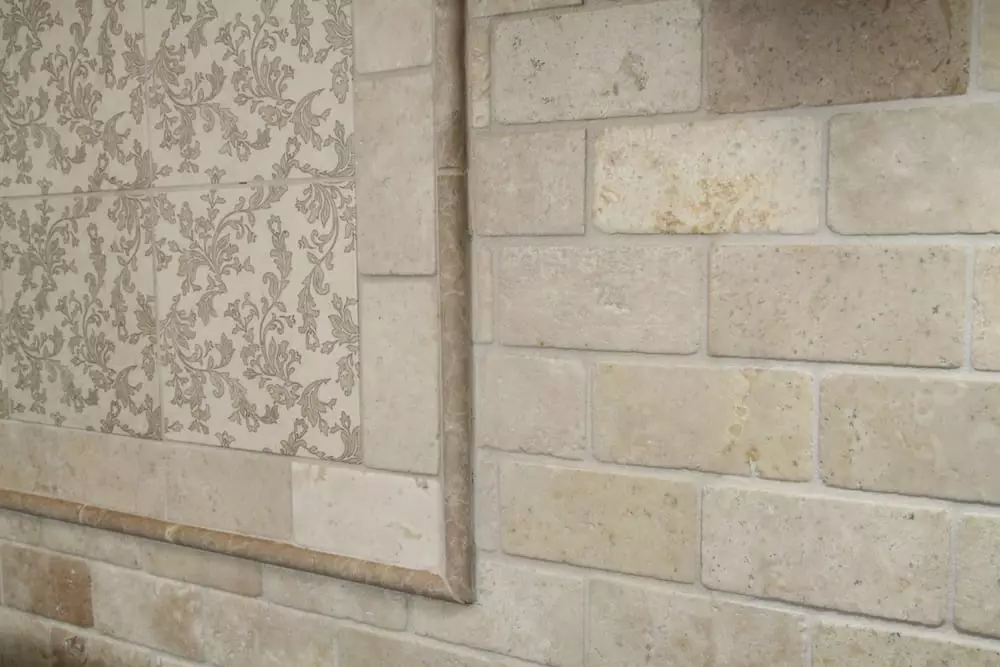
You can never go wrong with the timeless elegance of marble, granite, and travertine. Every stone features unique veining and swirls, so no two installations are alike, whether you choose a classic tile layout or a full slab.
Natural stone does require care. It needs to be sealed at installation and resealed periodically to stay stain-resistant, and it’s more prone to scratches and stains than tile. It also tends to be pricier, but it’s one of the few backsplash materials that can add resale value to your home.
Wood
Wood brings unmatched texture into your kitchen. Real wood provides an artisanal, craftsman look, especially when paired with solid wood cabinetry. Keep in mind, however, that it’s usually harder to clean and needs more upkeep than tile. So, it works best away from your sink and cooktop.
Stainless Steel
Stainless steel gives the space a sleek, industrial appearance. It looks high-end, reflects light to brighten the space, and wipes clean in seconds. It’s a top choice for homeowners who cook often and want a kitchen that looks like it came straight out of a high-end restaurant.
Thermoplastic
Thermoplastic panels can be made to mimic other materials, such as stone or wood, giving you a custom look at a fraction of the cost. They’re highly durable and clean up easily. Check the manufacturer’s heat rating before installing them directly behind your range to prevent warping.
Choosing the Right Backsplash for Your Kitchen
Knowing how to choose a kitchen backsplash boils down to balancing function, style, and budget. Let’s go over what you should consider before you decide.
Consider How You Use Your Kitchen
Start by considering your cooking routines. If your kitchen is always busy, it’s best to choose a material that’s durable and easy to maintain, such as porcelain, glass, or stainless steel.
Coordinate With Your Cabinets and Countertops
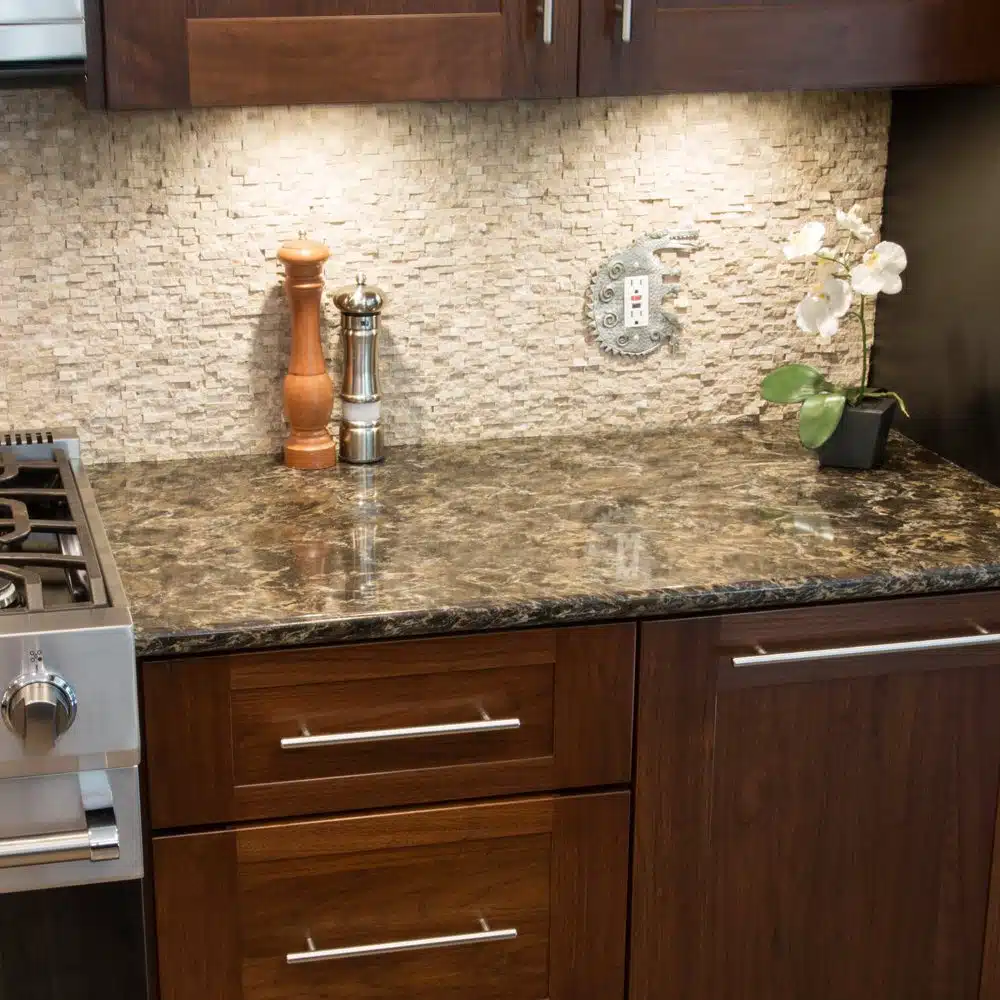
Your backsplash should work in harmony with your cabinetry, countertops, and appliances. If your cabinets look tired next to a stunning new backsplash, solid wood refacing can give you like-new cabinetry without the cost of a full replacement.
For best results, choose your backsplash and cabinet finish together. Then, compare samples side by side in your kitchen’s actual light before you decide.
Don’t Just Follow the Latest Trend
Subway tile is everywhere. However, it’s largely because it’s one of the most affordable options, which is exactly why house flippers love it.
Instead of following a trend, think about the atmosphere you want to evoke, whether it’s the warmth of a farmhouse or the sleek look of an urban loft. Then, choose the material and the layout that will bring it to reality, so you can have a kitchen that feels more “you.”
Keep Your Budget in Mind
Budget is a major factor in any renovation project. So, once you know how much material you need, compare prices across materials and watch for end-of-season sales and close-outs.
Consider installation costs as well. A professional project may cost more upfront, but it helps prevent costly mistakes during the process. More importantly, reliable contractors protect your investment for years through extensive warranties.
It also pays to think long-term. A cheaper material that chips, stains, or peels within a few years usually ends up costing more than a durable one installed right the first time.
Need Help With Your Backsplash Design and Installation?
From classic subway tile to bold geometric patterns, and from ceramic to stainless steel, there’s a backsplash for every style and budget. The key is choosing one that fits your needs.
American Wood Reface goes beyond cabinet refacing, helping you transform your entire kitchen. We reface your cabinet boxes with 1/4″ solid wood facings, replace your doors and drawer fronts with handcrafted select-grade solid wood, and install brand-new, heavy-duty hardware.
When you choose us for your solid wood refacing project, our kitchen backsplash installation is available as an add-on service. In turn, your new backsplash and refaced cabinets are designed to work together to give your kitchen a single, seamless look.
Want to explore your kitchen backsplash layout options? American Wood Reface’s design team will help you choose materials and finishes that complement your new cabinetry. Schedule your in-home consultation today.