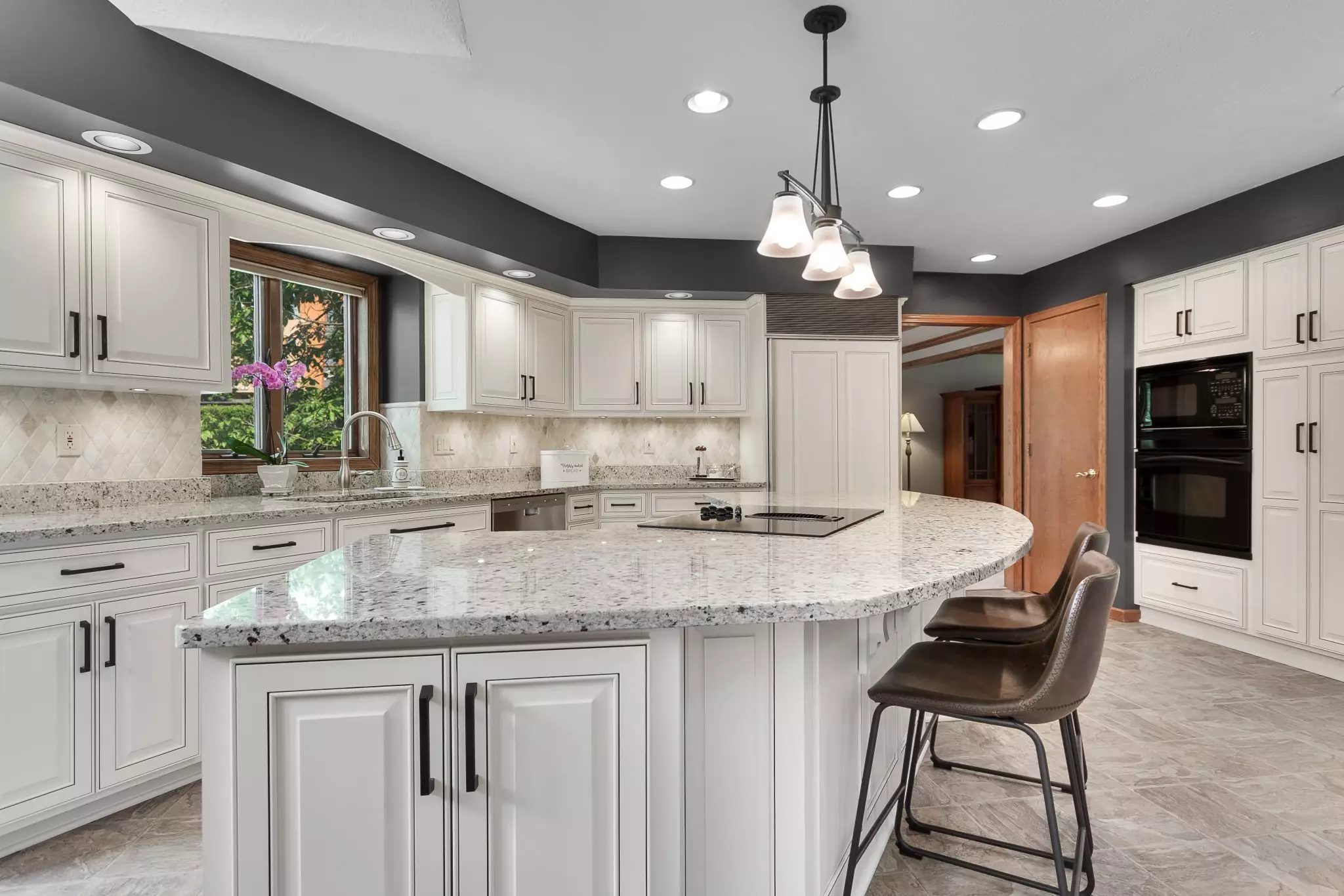
Cabinet refacing involves upgrading your cabinet faces, doors, hardware, drawers, finishes, and more, while leaving much of your cabinet boxes intact.
It sounds straightforward, doesn’t it? But what often makes or breaks your refacing project is the material you choose for your cabinet surfaces. It will dictate the quality, durability, and long-term value of the work you’re paying for, which is why understanding the materials available to you is crucial.
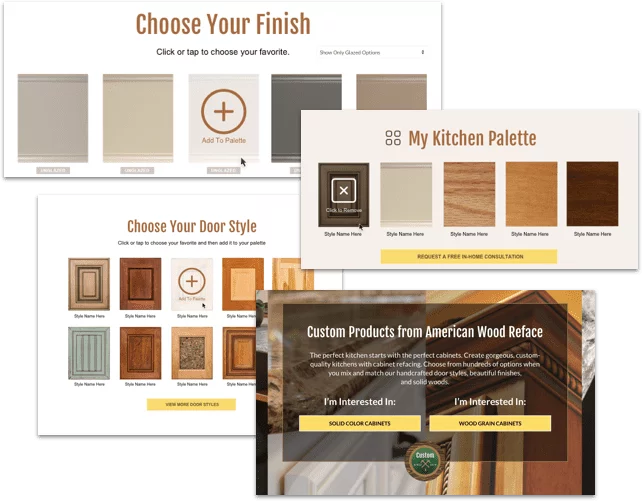
This isn’t a problem at American Wood Reface. We exclusively use 1/4″ select-grade solid wood for cabinet refacing projects, secured with construction adhesive and pin-nailed to your cabinet frames for a secure, lasting bond. We also install brand-new, custom-crafted solid wood doors and drawer fronts, so you can be sure that your newly refaced cabinets stand the test of time.
What “Traditional Refacing” Means (and What It Often Uses)
Generally speaking, cabinet refacing refers to a two-part process:
- Replacing cabinet doors, drawer fronts, and hardware
- Applying a new surface material to visible cabinet faces
This delivers a dramatic visual transformation at a fraction of the cost and without the disruption and lengthy timeline of a replacement project.
What distinguishes solid wood cabinet refacing projects from traditional refacing is the materials you choose. Two common low-cost options in traditional refacing are laminates and wood veneers. These materials are popular because they allow contractors to complete projects quickly and at a lower cost, often with higher profit margins.
However, they come with trade-offs to consider before committing. Let’s go over them in detail.
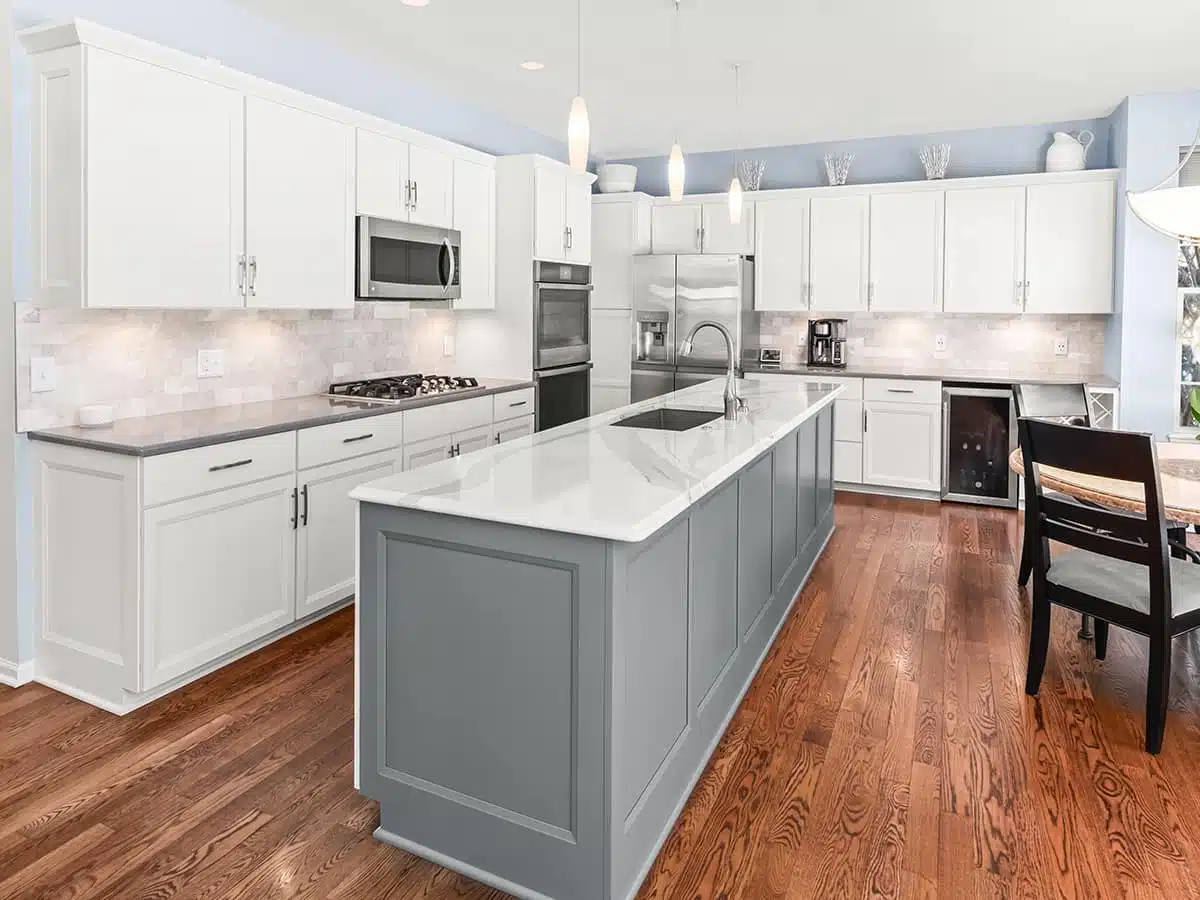
- Laminate is a synthetic material made of several thin layers of plastic, wood, or paper. It mimics wood grain at a distance, but they lack the natural depth and warmth commonly associated with real solid wood. More importantly, once it chips, peels, or wears down, you’ll have to replace it as repairs and refinishing are difficult, if not impossible.
- Thin wood veneer is technically real wood, but it only uses a very thin slice applied over an MDF or particleboard substrate. It’s also so thin that scratches and dents can penetrate the surface, exposing the material beneath. This makes it highly challenging to repair and is better replaced when damaged.
Of course, these materials have their place, especially when you have a really tight budget. However, it’s important to make these distinctions to help you understand that material choices are crucial to the durability, longevity, and long-term value of your newly refaced cabinets.
The Three Materials Side by Side
Understanding the distinctions among the materials you use allows you to make a better-informed decision that aligns with your budget. Here’s a quick comparison of cabinet refacing materials to help you get started.
Laminate
- What It Is: A synthetic material made of layers of plastic, wood, or paper, then printed with a wood-grain image.
- Appearance: Laminate has a clean, uniform look at installation and can mimic wood from a distance. However, it lacks the depth, grain variation, and warmth of real wood. It becomes obvious that it’s synthetic in everyday settings.
- Durability: It’s initially resistant to stains and moisture, but it tends to wear at the edges over time. Peeling and chipping are common, especially near high-touch areas.
- Repairability: Damaged laminate becomes difficult, if not impossible, to repair. You’ll often need to replace chipped, cracked, or peeling sections, which take time and money. You’ll also have to find laminate replacements that exactly match your old ones.
- Best For: Low-budget, short-term updates where your main goal is to improve your cabinets’ appearance, regardless of whether the upgrade lasts.
Thin Wood Veneer
- What It Is: A thin slice of real wood applied over a medium-density fiberboard (MDF) or plywood.
- Appearance: Veneers feature natural grain patterns because they are real wood.
- Durability: Veneers are very thin, which significantly affects their longevity. Surface scratches can penetrate through the material and expose the substrate underneath—a problem that also makes it difficult to sand without risking permanent damage.
- Repairability: You can touch up minor imperfections, but deeper scratches or wear typically require replacing the entire damaged panel.
- Best For: Homeowners who want the look and feel of real wood at a lower cost, yet don’t necessarily need their kitchen to hold up for decades.
1/4″ Solid Wood
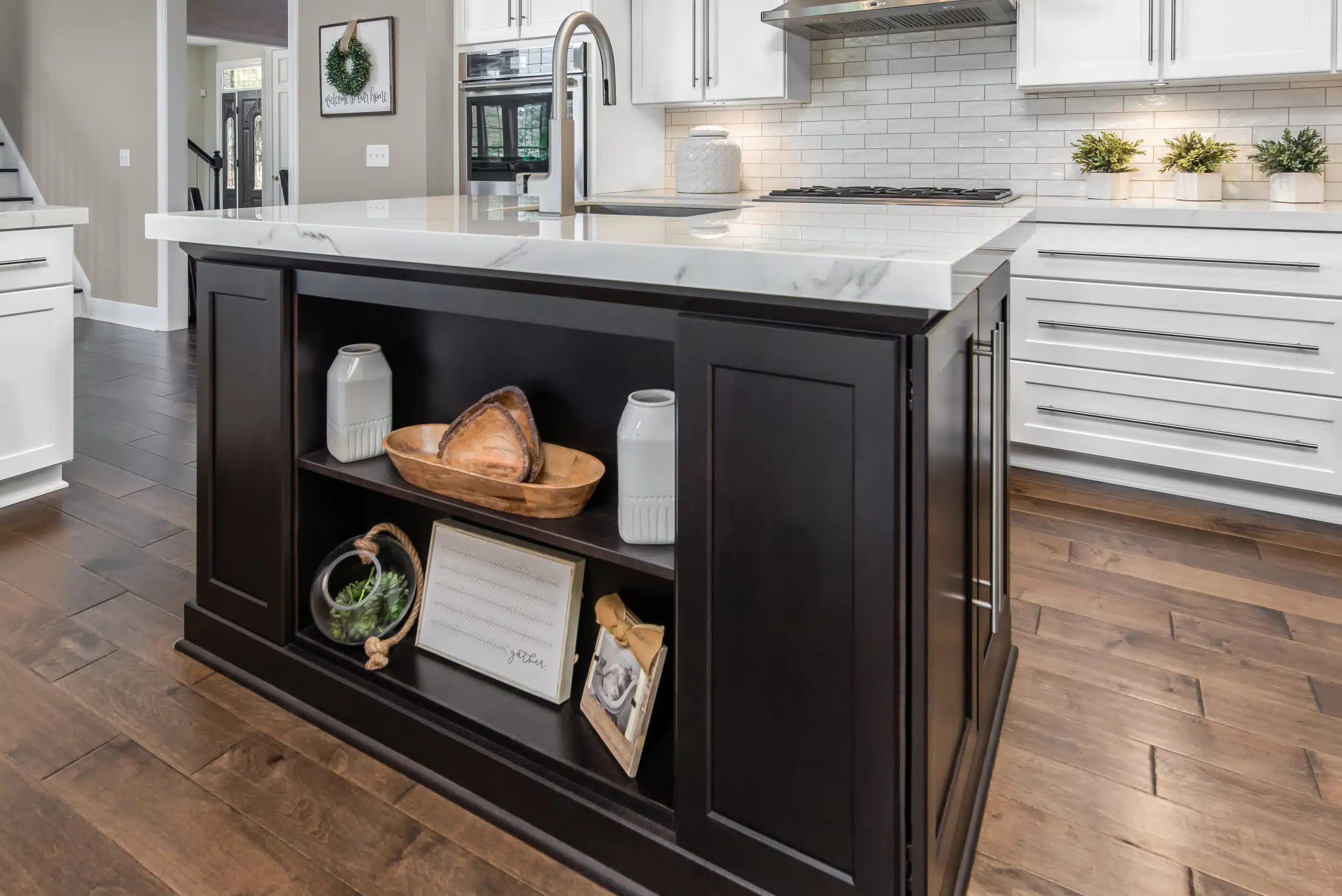
- What It Is: A quarter-inch solid wood facing made of select-grade hardwood, pin-nailed directly to the cabinet face.
- Appearance: Solid wood offers true grain depth, natural variation, and a warmth that synthetic materials and veneers simply can’t replicate. Over time, it continues to look and feel premium.
- Durability: With proper care, 1/4″ solid wood can last for decades. Its density and structure make it naturally resistant to the daily wear of a busy kitchen environment.
- Repairability: You can sand, stain, and refinish solid wood several times, allowing you to change its style multiple times over the years. This is because it’s 1/4″ thick, which is enough to withstand modifications, unlike 1/16” veneers that offer little to no margin for restoration.
- Best For: Homeowners who want a long-term investment. It’s a material that looks and feels exceptional, adds genuine resale value (up to 70%!), and holds up for decades.
What Happens in a Kitchen Over Time and Its Effects on Material Durability
Kitchens are among the busiest rooms in a home. Cabinet surfaces are constantly exposed to heat, moisture, and touch, so the real test of any refacing material is how it performs over the years. Let’s go over how laminate, veneer, and solid wood cabinets fare in your kitchen.
Near the Cooktop
Heat and steam are concentrated in these spaces, weakening adhesives in laminates and degrading the substrates to which wood veneers are attached. Since solid wood is a single, thick material, it can withstand heat and maintain its integrity even in busy kitchens.
Near the Sink
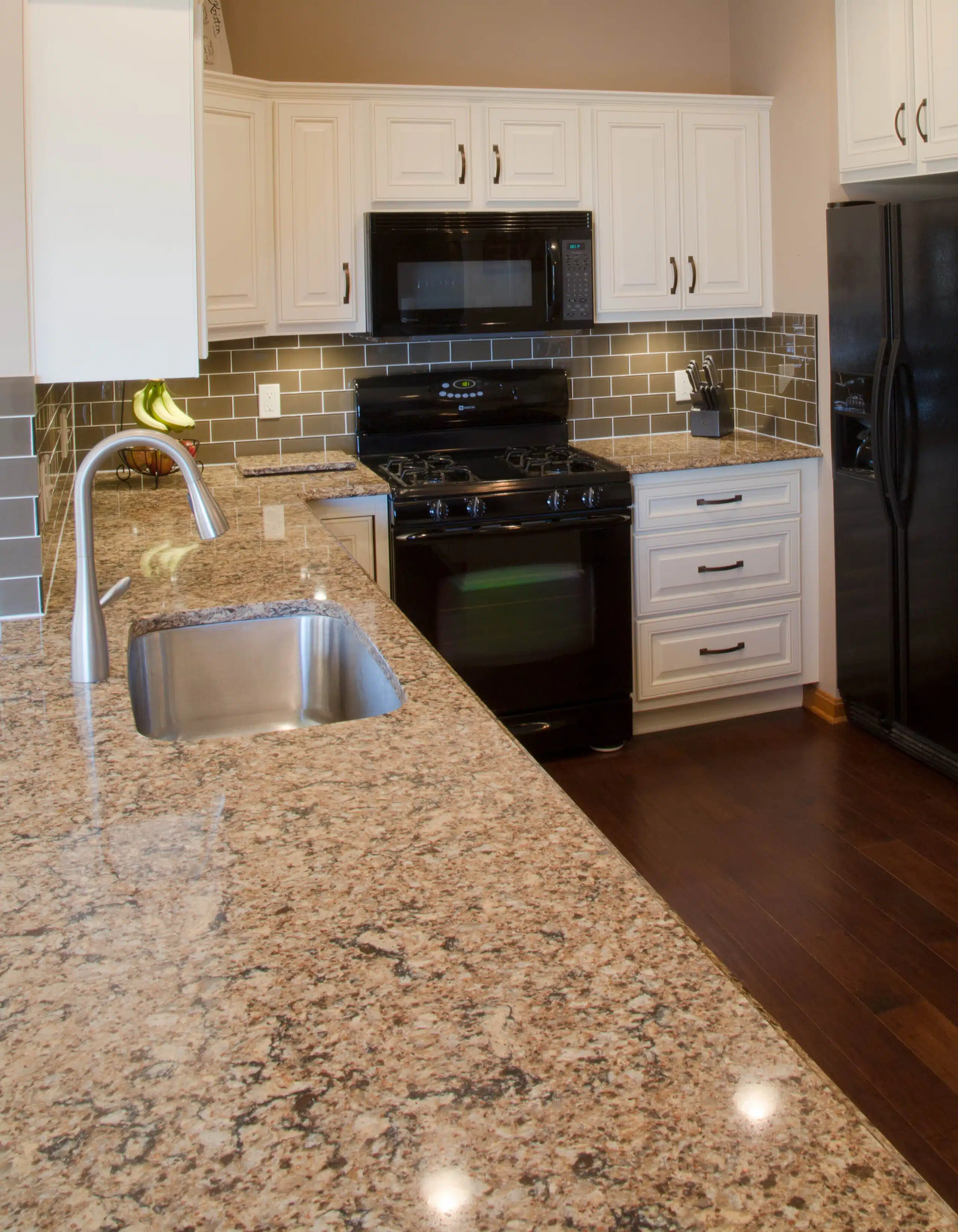
Moisture is a common problem among refacing materials. Laminate and veneer are particularly vulnerable, as water can seep into their seams, causing edges to lift or separate. Solid wood, when properly sealed, manages moisture far more efficiently. If the finish breaks down, you can simply reseal without worry.
High-Contact Areas
Opening, closing, bumping, and cleaning can cause laminates to chip or peel along the edges. They also scratch thin veneers, exposing the material beneath. Meanwhile, instead of failing, damage to solid wood causes minor scuffs and softened edges that are easily sanded out and refinished if necessary.
Over Time
In five to 10 years, laminates and thin veneers will start to sustain structural wear, such as peeling and chipping, which require replacement to correct. On the other hand, you can restain, refinish, or even leave solid wood as-is to develop a natural patina and give your kitchen a more lived-in atmosphere.
Why Solid Wood Is a Long-Term Investment
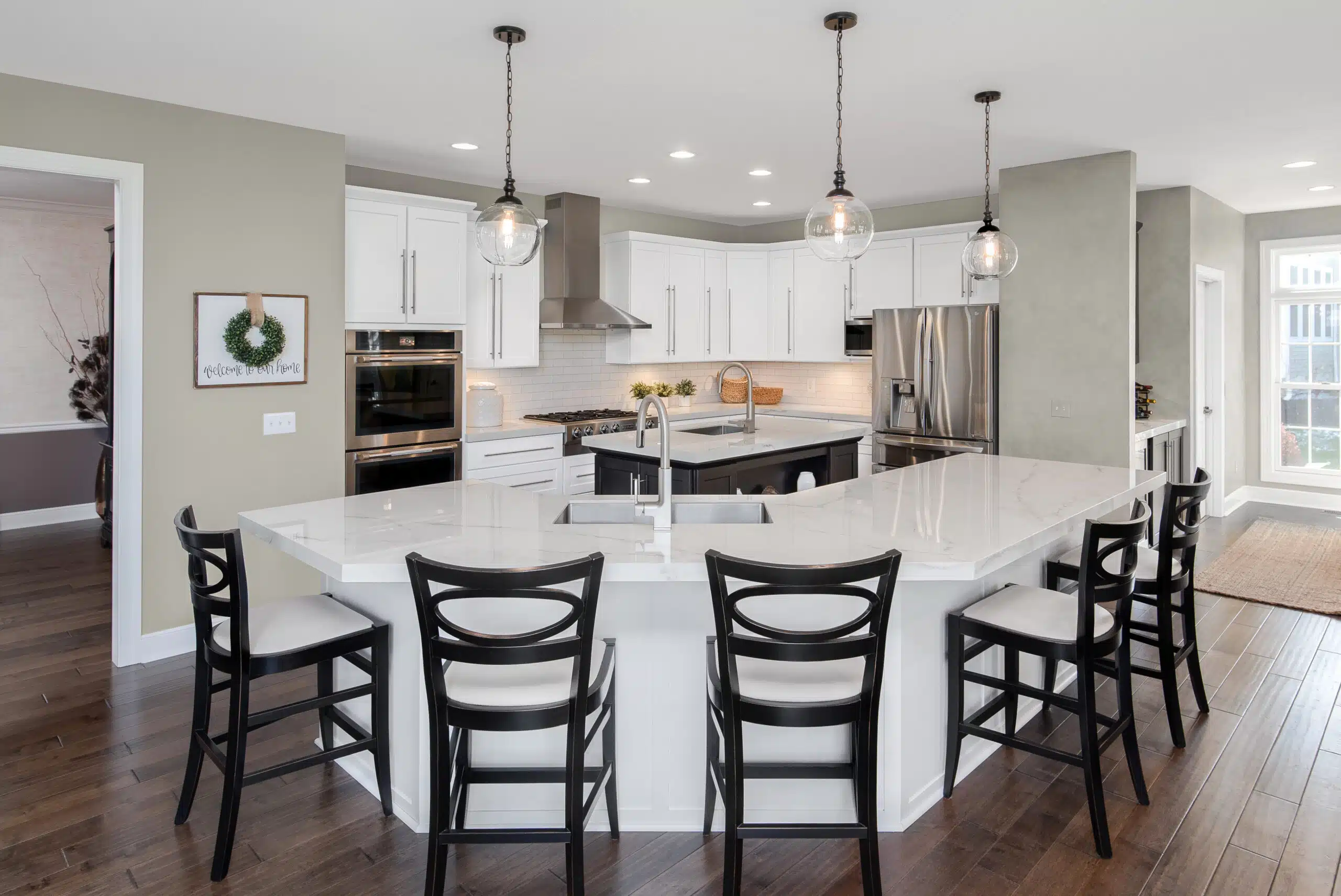
The biggest advantage of using solid wood is its durability over time. When a laminate or thin veneer is damaged, or you want to change styles, replacement is typically your only option. Meanwhile, the thickness and durability of 1/4″ select-grade solid wood can be sanded, stained, or refinished, making it a long-term asset to your durable kitchen cabinet refacing project.
This flexibility is also valuable in practical ways. For instance, if you’re preparing your home for sale, a fresh stain on solid wood cabinets can instantly renew your kitchen without replacing them and boost your resale value. Your cabinetry can also evolve with your style preferences over the years, and daily wear is manageable with spot refinishing rather than replacement.
Your kitchen is likely your home’s busiest area, and investing in premium and durable materials like 1/4″ select-grade solid wood for your refacing project offers better returns over the long term.
Choosing the Right Wood Species for Your Kitchen
A primary advantage of working with solid wood is that it lets you control your kitchen’s look by choosing the species you prefer. These options include:
- Cherry has a rich, warm tone and a reddish hue that naturally deepens over time as it is exposed to light, adding visual depth to your kitchen.
- Maple offers a bright appearance with consistent grain and smooth texture. As such, it’s an excellent choice for stained finishes and solid color cabinets, depending on the style you’re after.
- Birch has a soft brown tone with a subtle grain. Its smoothness and hardness allow you to add a wide range of finishes, especially solid colors.
- Hickory features bold grain variations and color contrast, with exceptional hardness and density. It’s ideal for busy kitchens and nature-inspired homes where natural texture is part of the appeal.
That said, no matter which species you pick, the quality of real wood in cabinet refacing makes it a solid choice for your project. All options are available in various finishes, from natural stains to solid colors, to match your vision.
American Wood Reface’s Exclusive Commitment to 1/4″ Solid Wood
At American Wood Reface, we never reface with laminate or thin veneer. We exclusively use 1/4″ select-grade solid wood for cabinet faces because we believe that our customers want and deserve the best materials available to ensure a stunning kitchen that is made to last.
Beyond high-quality materials, our team of master craftsmen is also crucial to our process. Their skill and experience in refacing techniques is unparalleled. Together, premium materials and expert installation is sure to make your cabinetry look stunning and unique.
FAQs
A 1/4″ solid wood facing is a full quarter-inch of genuine hardwood secured with construction adhesive and pin-nailed to the cabinet face frame. Its long-term durability far exceeds that of other traditional refacing materials. While factory-finished 1/4″ solid wood withstands decades of daily use before showing significant wear, it is even thick enough to sand, refinish, and repair multiple times, if desired.
A thin veneer is typically 1/16″ to 1/8″ thick, which means surface scratches can penetrate to the MDF substrate beneath. You also can’t refinish it without risk of cutting through the wood layer entirely.
Solid wood refaced cabinets typically require nothing more than cleaning with a damp cloth to stay in prime condition for decades, if desired, you can sand and refinish solid wood cabinet faces multiple times. This means you can update your kitchen’s look in the future without replacing any materials.
Solid wood cabinet refacing can last decades with minimal care and maintenance—significantly longer than laminate refacing (typically five to 10 years) or thin veneer, which both have limited refinishing potential.
American Wood Reface specializes exclusively in 1/4″ select-quality solid wood because it delivers the durability, functionality, and genuine premium look and feel that make the refacing investment worthwhile long-term. And, if there is ever a need, solid wood can be refinished to extend the life of the cabinetry. Laminate and thin veneer are lower-cost but shorter-lived options that compromise on quality.
Yes! Cabinets that are expertly refaced with solid wood are indistinguishable from new, solid wood cabinetry and, therefore, look and feel genuinely high-end to buyers. Plus, because you can refinish them before a sale if someday they become worn or dated in appearance, you can present them in like-new condition without having to replace your cabinetry.
The Investment That Shows Up Every Day
Ultimately, solid wood cabinet refacing is a long-term investment in a space that sees constant use. We’re not saying that laminate and thin veneer are useless; they’re a good option for small-budget, short-term projects. However, if you want a kitchen that ages well and holds its value, solid wood is the way to go.
American Wood Reface can deliver. We go beyond refacing your cabinets using 1/4″ select-grade solid hardwood and replacing your doors and drawer fronts with new material—we offer optional cabinetry customizations. You can trust our expert craftsmen when it comes to reconfigurations, modifications, extensions, additions, drawer bank conversions, and crown molding. We also install storage and convenience features and have available backsplashes, countertops, sinks, and faucets.
We’re not just refacing installers—we’re artists and craftsmen in cabinetry and carpentry. That’s what separates us from other refacing service providers. While others are content to deliver satisfactory results, American Wood Reface aims to turn your kitchen into a space you can proudly call your own.
Schedule your free consultation to see the difference real wood makes.