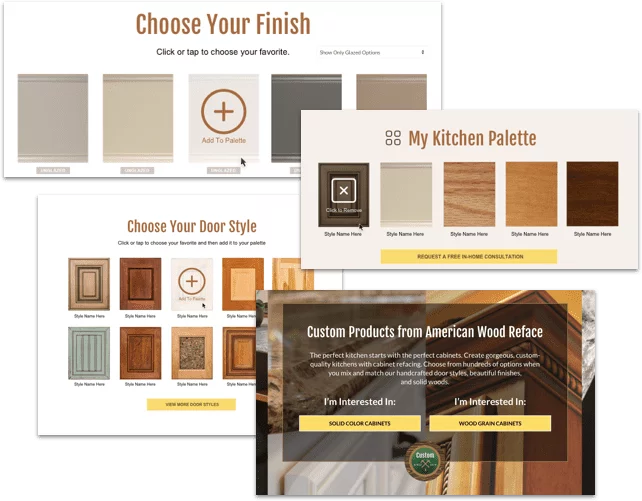
When your kitchen cabinets start looking tired, dated, or worn, tearing everything out isn’t your only option. Most homeowners would rather update their cabinets, and it’s no surprise. It’s easier and far less expensive than replacing them.
The challenge is choosing how to go about doing it. This guide breaks down refinishing vs. refacing vs. resurfacing so you know exactly what you’re paying for. In this blog, we will discuss:
- What each term means
- How the three compare side by side
- Which one is right for your kitchen
- What refacing looks like with American Wood Reface
What Each Term Means
Refinishing, resurfacing, and refacing are often used interchangeably, but they’re three distinct processes that produce different results.
Cabinet Refinishing
Refinishing is the most surface-level of these approaches. Your cabinetry’s old finish is stripped off, and its surface is sanded down to prepare it for a new coat of paint or stain.
Paint covers most discolorations and imperfections, making color the main focus of your cabinetry. Meanwhile, stain lets natural wood grain show through. Homeowners usually opt for it when they love the look of wood but want a different shade.
However, door styles and any wear on your cabinet surfaces stay exactly as they are. Refinishing also depends on the material. Stripping and staining require real wood to penetrate, so laminate or thermofoil cabinets aren’t ideal for a stain refinish.
Cabinet Resurfacing
Resurfacing typically involves applying a self-sticking veneer directly over your cabinets’ surfaces.
If you want to take it a step further, you can have your old cabinet doors and drawer fronts replaced outright. Alternatively, you can keep your existing doors and have a thin wood veneer or laminate applied over their surfaces as well.
Either way, new surfaces are only as good as the adhesive and application method, as well as what’s underneath them. Because resurfacing covers your cabinets rather than rebuilding them, it’s primarily a cosmetic update designed for cabinets that are mostly in good shape. And the longevity of this renewal strategy may be compromised by ineffective application or adhesion of the veneer.
Cabinet Refacing
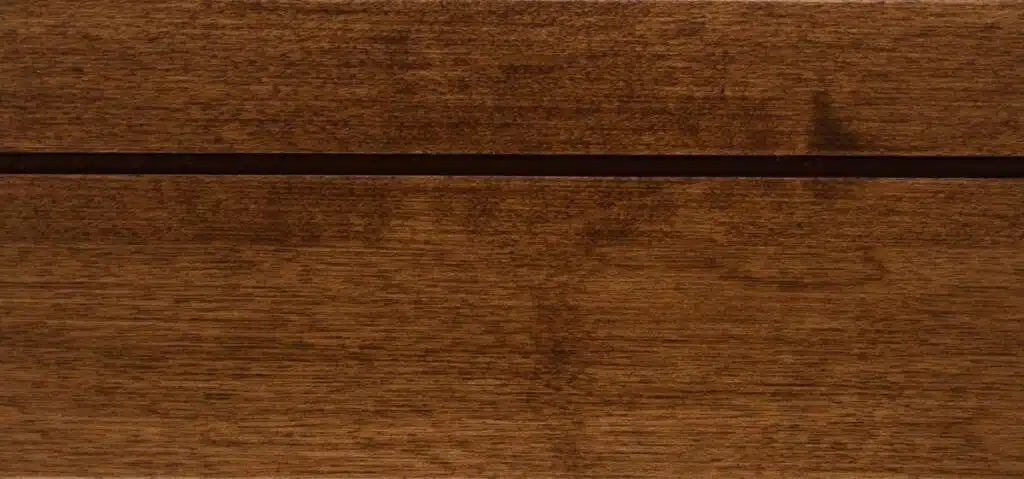
Solid wood cabinet refacing delivers the look and feel of brand-new cabinetry without the cost and disruption of tearing out cabinet boxes. It uses solid wood to restore cabinet surfaces and is vastly more durable than paint or veneer. Your installer removes the old doors, drawer fronts, and trim pieces, then fits cabinet faces with solid hardwood in your chosen wood and finish. Typically, new doors and drawer fronts are installed. Because your cabinet boxes stay in place, refacing also entails minimal demolition, fewer unexpected expenses, and a lower risk of damage to the rest of your home.
Not every company does it the same way, however. Some companies use cheaper materials such as thin veneers or vinyl thermofoil, which have limited longevity, and they may not offer many styles, options, or customizations. At American Wood Reface, we use only durable, premium materials and offer a full suite of options. We reface cabinet boxes with 1/4″ solid wood facing, replace doors and drawer fronts with new doors handcrafted from select-grade solid wood, and install brand-new, heavy-duty hardware. Our top-quality cabinet refacing service offers a large selection of woods, door styles, and both solid color and wood finishes, as well as numerous installation options. We can even modify, extend, or add cabinets for a true remodel of your refaced kitchen.
Refinishing vs. Refacing vs. Resurfacing at a Glance
Here’s how these options stack up across factors that matter most to homeowners.
| Refinishing | Resurfacing | Refacing | |
|---|---|---|---|
| What Happens | The old finish is stripped and sanded; new paint or stain is applied | Veneer or laminate is applied over existing surfaces; doors are covered or replaced | Cabinet boxes are refaced with 1/4″ solid wood; doors and drawers are replaced with handcrafted, select-grade solid wood; new hardware is installed |
| What It Costs | Low upfront cost, but higher repair costs down the road | Low upfront cost, but higher replacement costs when the surface under the veneer or laminate wears out | Higher upfront cost, but provides better long-term value; well under the cost of a full remodel, but provides similar results |
| How Long | It depends on preparation, coats, and drying time | Often faster than refacing | About a week of installation, plus lead time for custom components |
| Best For | Sound cabinets that only need a color change | Minor scratches, dents, and faded color, while working on a tight budget | Achieving a new-looking, long-lasting kitchen without the need for a full tear-out replacement project |
| Limitations | Doesn’t change door styles or address surface wear; stain reveals old flaws | Dents and uneven surfaces can show; thin veneer and laminate can chip and peel | High initial investment, though it pays off in long-term durability, function, and value |
Which One Is Right for Your Kitchen?
The right choice depends on your cabinets’ condition, your budget, and how long you want results to last.
When to Refinish Kitchen Cabinets
Refinishing makes sense when your cabinet boxes and doors are solid wood, structurally sound, and free of noticeable damage, and you just want a new color. It’s a good fit if you already like your door style and layout.
If your cabinets are chipped, warped, or simply outdated in shape, a fresh coat of paint won’t fix them.
When to Have Kitchen Cabinets Resurfaced
Resurfacing works best when you’re fixing minor cosmetic blemishes, such as:
- Scratches
- Dents
- Faded colors
A thin laminate or wood veneer covers those issues, giving your cabinets a new look while hiding the damage underneath. That said, since veneer sticks directly over the original surface, some blemishes can still show through, such as deep gouges or raised edges. And the renewed effect is unlikely to last long before damage or peeling begins to occur.
When to Reface Kitchen Cabinets
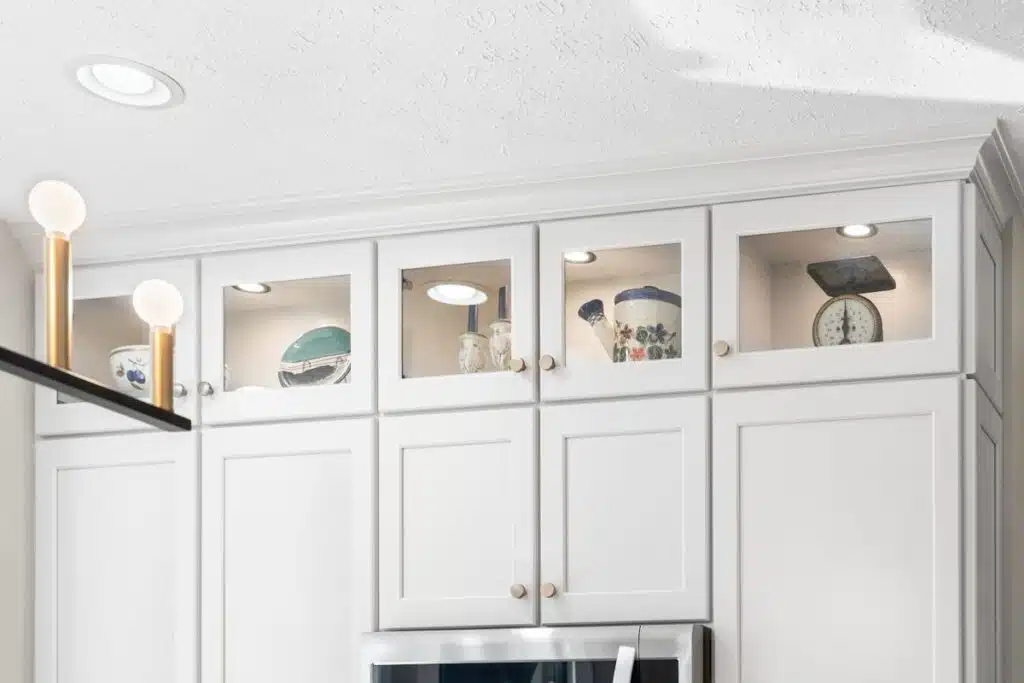
Refacing is the right choice when your cabinet boxes are relatively sturdy, but everything you see and touch needs an upgrade. That includes outdated door styles, worn finishes, loose or failing hardware, and surfaces with damage too serious for veneer to hide.
It’s also the best approach if you want to make changes to your cabinetry and modernize its function. This is because American Wood Reface employs master cabinetmakers and carpenters with the advanced skills to make modifications to the cabinets to change their size or function, such as extending cabinets to the ceiling or converting lower cabinets to drawer banks. American Wood Reface also installs new countertops, cabinet lighting, shelves, drawers, pull-out trash bins, and other features that elevate your kitchen’s functionality and convenience.
Refacing vs. Resurfacing Kitchen Cabinets: Cost and Timeline
Resurfacing is cheaper upfront. If you want to save money on the job and don’t need any cabinet modifications, resurfacing might work for you.
Cabinet refacing costs more upfront but can save you money in the long run, especially compared to a complete kitchen remodel. Solid wood withstands daily use with far less wear and tear, so you won’t have to redo your cabinets a few years down the road.
Handcrafted solid wood doors can also boost your return on investment if you ever decide to sell.
As for timing, resurfacing is faster than refacing, but only by a few days or so. Refacing takes a little longer to start because your doors are custom-made for your kitchen. For a higher-quality build and a look you’ll love for decades, those extra days are well worth the wait.
Questions to Ask Before You Choose a Provider
Because refinishing, resurfacing, and refacing are so often confused, it pays to ask the right questions before you sign anything. A few minutes of due diligence can keep you from paying for the wrong service.
- What material goes on my cabinet faces, and how thick is it?
- Are my doors and drawer fronts being replaced or just covered?
- Are the doors custom-made for my kitchen?
- Is brand-new hardware included (both mounting hardware/hinges and pulls)?
- Can the finished surfaces be sanded and refinished in the future?
- Can you modify or reconfigure my cabinets?
- Can you install convenience and organization features?
- What warranty comes with the work?
Thankfully, you don’t have to look far for a reliable contractor; American Wood Reface gets the job done.
What Refacing Looks Like With American Wood Reface
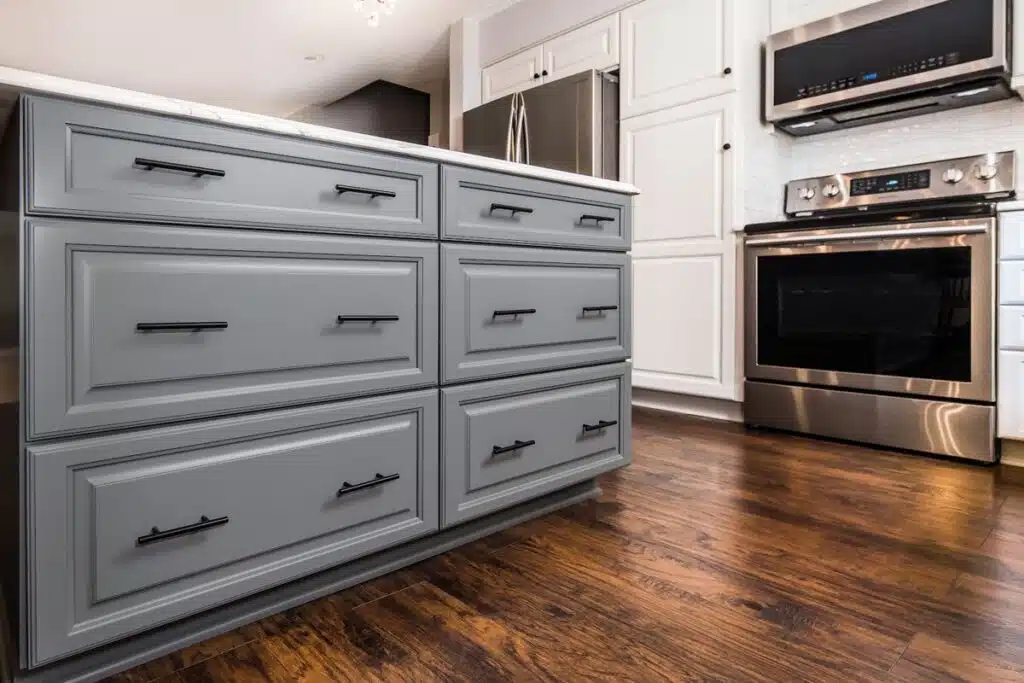
American Wood Reface never refaces with laminate or thin veneer. We exclusively use 1/4″ solid wood for your cabinet faces and install new doors and drawer fronts hand-crafted from select-grade solid wood in the species of your choice. A nearly unlimited array of colors and wood finishes is available, including custom colors, highlighting glazes, and distressed finishes, to match your vision. Brand-new, heavy-duty hardware completes this transformation.
Solid wood refacing also goes well beyond new surfaces. Our master craftsmen can reconfigure, modify, extend, and add cabinets, convert drawer banks, and install crown molding, storage features, and cabinet lighting. We also offer new countertops and backsplashes to tie everything together.
Because solid wood refacing keeps your existing cabinet boxes in place, it sends far less material to the landfill than a full replacement. As such, it’s an eco-friendly way to upgrade your kitchen.
Every project starts with your in-home consultation, where our design team measures your kitchen, walks you through wood species, door styles, finishes, and options, and develops a plan tailored to your goals and budget. Lastly, we provide a Limited Lifetime Homeowner’s Warranty to back our work.
Give Your Kitchen an Upgrade With Solid Wood Refacing
Are you still unsure whether you need to refinish, reface, or resurface your kitchen cabinets? Look to our experts for the insights and guidance you need. Our kitchen refacing experts will help you decide which option is best suited to your kitchen. With our free in-home consultation, it could not be easier.
Schedule your in-home consultation with American Wood Reface to start your kitchen refacing project today.